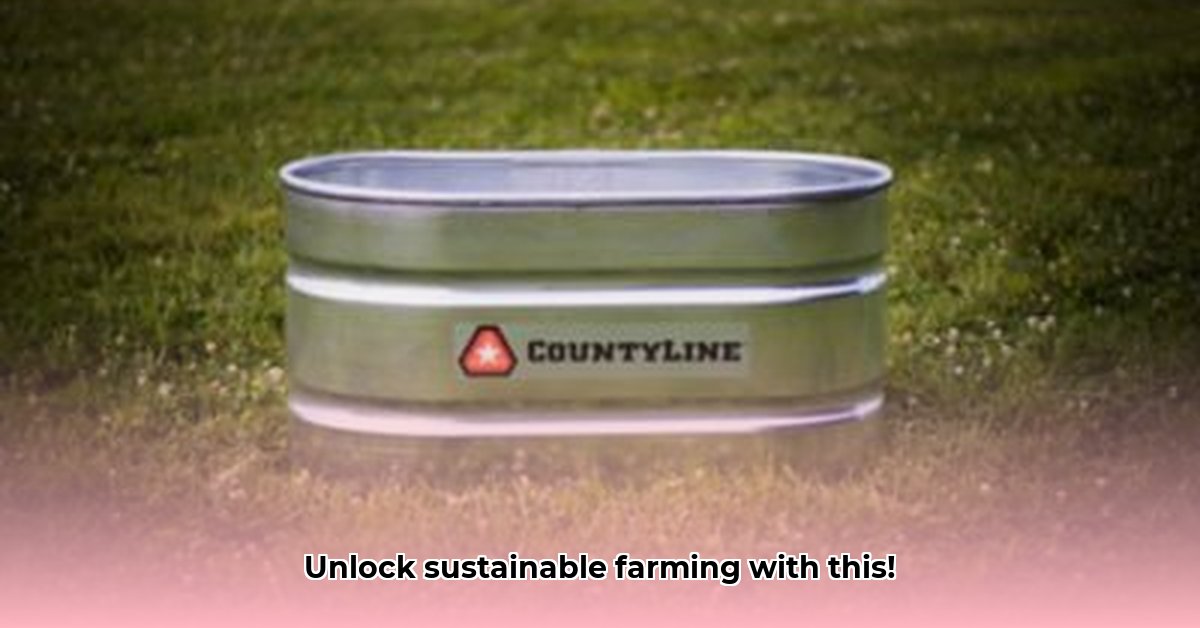
Thinking about improving your farm's water management? The Tractor Supply 100-gallon stock tank is a popular choice, but is it the right fit for your operation and sustainability goals? This comprehensive guide explores its features, benefits, limitations, and environmental impact to help you make an informed decision. For smaller operations, consider a smaller tank option.
Durability and Longevity: A Long-Term Investment
This isn't your average plastic container. The Tractor Supply 100-gallon stock tank is constructed from robust polyethylene plastic, designed to withstand harsh weather conditions and the rigors of farm life. Its resistance to cracking and leaking significantly extends its lifespan compared to cheaper alternatives. This translates to long-term cost savings and reduced waste, making it a potentially sound financial and environmental choice. How long can you expect it to last? Many users report several years of reliable service.
Ease of Use and Maintenance: Time-Saving Design
Cleaning this tank is a breeze. The large drain plug simplifies emptying and scrubbing, ensuring hygiene for your livestock's water supply. This ease of maintenance saves valuable time and effort, allowing you to focus on other tasks around the farm. It's a simple but important factor to consider in the daily routine of farm life.
Versatility: Adaptable for Multiple Uses
The 100-gallon stock tank offers impressive versatility beyond its primary function as a livestock water trough. It can be effectively used for:
- Livestock watering: Providing clean, fresh water is crucial for animal health and well-being.
- Rainwater harvesting: Conserving water is crucial in agriculture. This tank can help collect rainwater for irrigation or other uses.
- Emergency water storage: Maintaining a backup supply is vital, especially during droughts or natural disasters.
- Feed storage: Protecting feed from the elements helps prevent spoilage and waste.
- Tool storage: A surprisingly handy storage solution for farm tools and equipment.
This adaptability makes it a valuable asset on any farm, maximizing its overall utility and value.
Environmental Impact: A Closer Look
While the tank's durability is a positive attribute, assessing its overall environmental impact is crucial. The polyethylene plastic comes from petroleum, and its manufacturing, transportation, and eventual disposal all have environmental footprints. While current data lacks detailed life cycle assessments (LCA) for this specific tank, a broader LCA on similar polyethylene products indicates a wide range of environmental impacts. It's crucial to note that these manufacturing processes can contribute to greenhouse gas emissions. Also, the recycling infrastructure for polyethylene varies greatly, and the potential for long-term material degradation needs further investigation. However, polyethylene tanks often require less energy for transportation than heavier alternatives of similar capacity. This is an important offset to consider.
Cost and Sizing: Choosing the Right Fit
The 100-gallon capacity is a popular choice, but the ideal size depends on your specific needs. Carefully evaluate your livestock's water consumption and the volume of rainwater you expect to harvest. Tractor Supply and competing retailers offer different sizes, but are these the most economical choices for your operation? What might be the optimal cost equation over the product's lifetime? Consider additional costs like float valves for optimized water management.
Actionable Steps: A Practical Guide
To make an informed decision about purchasing a Tractor Supply 100-gallon stock tank, follow these steps:
- Assess water needs: Calculate your daily water requirements for livestock and potential rainwater harvesting.
- Compare options: Evaluate costs, lifespan expectations, maintenance needs, and features of different tanks.
- Investigate material sourcing: Seek manufacturers who provide transparent data on their environmental practices and sustainability initiatives.
- Plan for disposal: Research your local recycling options for polyethylene plastics to ensure responsible disposal methods are available at the end of the tank's life. Consider your community's waste management capabilities.
Following these steps will ensure a responsible and effective investment.
Weighing the Pros and Cons: A Balanced Perspective
To summarize, here's a balanced assessment:
| Pros | Cons |
|---|---|
| Durable and long-lasting | Limited publicly available data on environmental impact |
| Easy to clean and maintain | Uncertain long-term recycling options in many areas |
| Versatile applications | Initial cost can be significant |
| Potentially cost-effective in the long run | Requires detailed long-term cost analysis |
| Widely available | May not be the optimal choice for all farm operations |
The Tractor Supply 100-gallon stock tank offers many benefits. However, making responsible procurement decisions requires a thorough understanding of its complete environmental lifecycle for truly sustainable farming practices. More transparency from manufacturers regarding their sustainability initiatives is crucial for informed consumer choices.